

Size Doesn’t Matter
Recently, Swiss Re’s Martin Boerlin and Surbhi Gupta published Verdicts on trial: The behavioral science behind America’s skyrocketing legal payouts. The piece looks at the results from a survey of U.S. adults and compiles their views on a variety of legal scenarios. To quote the authors:
“A clear pattern emerged: injury severity — not company size — is the strongest driver of verdict behavior…regardless of whether the defendant was a global brand or a local business.”
The paper throws cold water on the notion that large jury awards and nuclear verdicts are restricted to actions against mega corporations. Unfortunately, big money verdicts are something every business needs to worry about.
They Are Coming for You
Swiss Re’s unsettling findings accompany another insidious and growing malignancy on the legal landscape: Third Party Litigation Financing (TPLF).
At a high level, TPLF is, as its name implies, a third-party investing money to aid plaintiffs in bringing and pursuing lawsuits. This additional funding can enable plaintiffs and their attorneys to deepen and lengthen their litigation efforts. In return, the investors receive a share of the “winnings”, via a cut of the settlement or verdict. Financing can be provided to law firms or to plaintiffs themselves, and there is generally no obligation to repay if a case does not resolve in the plaintiff’s favor.
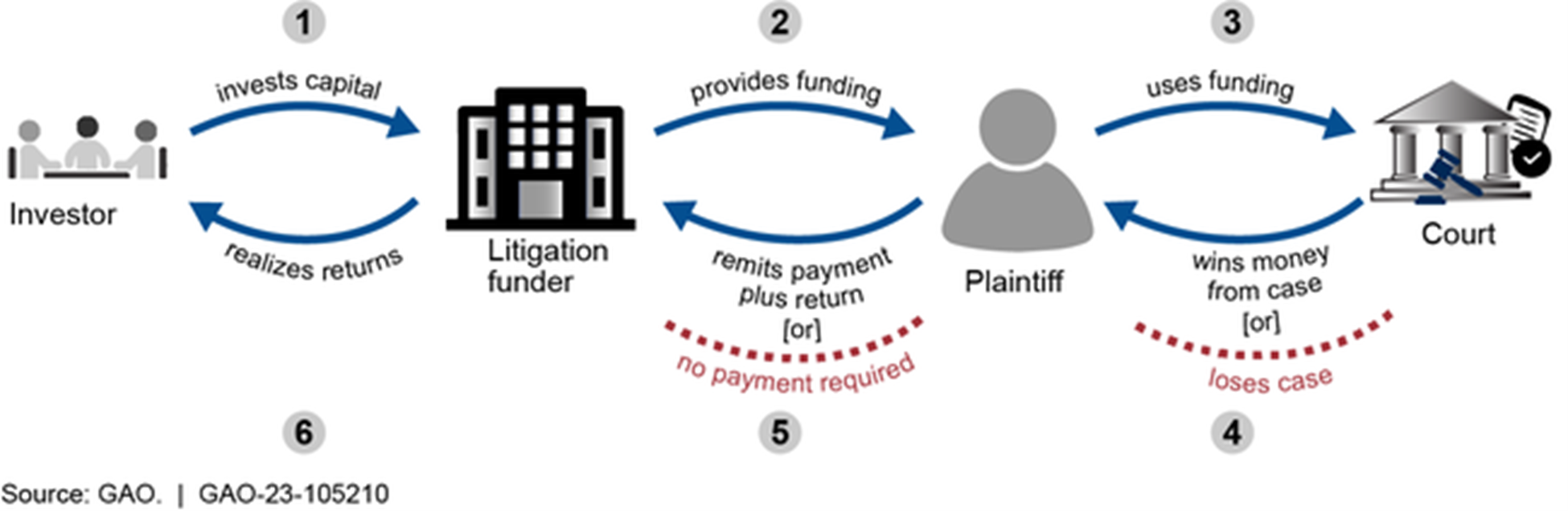
TPLF is a (very) big business. According to the US Chamber of Commerce, third-party litigation financing “has experienced explosive growth and is now a multi-billion-dollar industry worldwide, with an estimated $15.2 billion in commercial litigation investments in the United States alone”. For reference, $15 billion is greater than the market value of nearly 150 companies in the 2025 Fortune 500.
TPLF generally takes one of two forms: individual case funding or portfolio funding. With individual case financing, investors fund a single, specific case. With portfolio financing, investors fund a basket of separate cases with the hope of turning one or more of them into big cases, offsetting the outlay on losing cases.
As TPLF has attracted increasing volumes of institutional investment, these professional investors are seeking to benefit from the same portfolio theory they use to diversify more traditional asset holdings. This model encourages funders to back a greater number of claims, widening the net of potential defendants, including smaller companies that might never have faced such litigation before.
Portfolio financing can also appeal to plaintiff firms as economies of scale and other factors can enable them to pursue more cases with less expenditure.
These factors are shifting more investment into portfolio funding, and it is estimated that it now accounts for 40% of the overall market.
Portfolio funding has a particularly ominous bearing for smaller businesses as the approach enables funders to pursue cases that would otherwise be too small to stand on their own. With this shift funders have expanded their targeting from esoteric patent infringement matters and class actions into more mainstream cases – think personal and commercial auto. Interestingly, whether or not a defendant is insured is frequently used as a screening factor by many TPLFs.
Prevailing jury sentiments and TPLF both create a more challenging landscape for fleets and their insurers. Tort reform measures are making some headway in certain states, and there are attempts underway at the state and federal levels to curtail TPLF.
Nevertheless, with the likelihood and timing for success for these reforms remaining ambiguous at best, the most practical remedy for commercial fleets and auto insurers is to curtail the number and severity of accidents taking place in the first place.
Well run telematics and driver coaching programs remain some of the best tools available to drive reductions in expensive, premium-increasing losses. The fewer opportunities fleets create for litigation, the less attractive they become to the growing network of funders seeking their next case.